
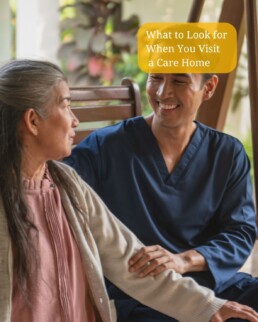
What to Look for When You Visit a Care Home
What to Look for When You Visit a Care Home
Most people visiting a care home for the first time don’t know what to look for. They notice whether it looks nice. They check if it smells clean. They look at the brochure. And then they leave with a vague impression that’s hard to act on.
The problem is that a care home can look beautiful, smell fresh, and have excellent marketing materials, and still not be a place where your loved one will genuinely thrive. The things that matter most are harder to see on a first visit—but they’re there if you know where to look.
Start before you walk through the door.
Notice how your call or enquiry was handled. Was the phone answered promptly? Did the person you spoke to seem genuinely interested in your situation, or were they running through a script? Did they ask about your loved one, or did they jump straight to availability and fees?
The way a care home treats prospective families is usually a reasonable indicator of how it treats the people who actually live there.
What to notice the moment you arrive
Give yourself a few seconds in the entrance before anyone greets you. What does the space feel like? Does it feel like somewhere people live, or somewhere people are managed?
Then pay attention to the staff you encounter. Do they make eye contact with residents as they pass? Do they use residents’ names? Do they stop, even briefly, to acknowledge someone sitting in a corridor or common area? These small moments tell you more about a home’s culture than any formal presentation will.
A good care home is one where staff are genuinely present with residents—not just physically in the building, but engaged with the people they care for. That’s visible. It either is, or it isn’t.
What to ask — and listen for
Most care homes will offer you a tour and a chance to ask questions. Use it. Here are the questions worth asking, and what to listen for in the answers.
What is your staff turnover like? High turnover is one of the clearest signals of problems in a care home — it means residents are constantly adapting to new faces, which is disorienting and distressing, particularly for anyone living with dementia. A home that retains its staff over years is a home where people want to work. That matters.
How do you handle a resident’s needs increasing? Listen for specificity. A good answer involves clinical capability, care plan reviews, and a clear process. A vague answer about doing their best is worth noting.
Can you tell me about a resident who has been here a long time? This question gets at whether the home is a place people stay, or a staging post before something else. Long-term residents strongly suggest a home that works.
What does a typical day look like? Push for real detail — actual activities, actual mealtimes, actual social structure. A confident home will give you a vivid picture. A home that struggles with this question may not have much happening.
What is included in the fees, and what isn’t? Ask this directly. Some homes charge a headline figure and then add extras for physiotherapy, hairdressing, entertainment, and even guest meals. Others, like Shipston Lodge, operate on a genuinely all-inclusive basis where the weekly fee covers everything. Over months and years, the difference for a family is significant—financially and emotionally.
What to look at beyond the decor
The physical environment matters, but not as brochure photography suggests. What you’re actually looking for is whether the space feels lived in rather than staged.
Are there personal items visible in residents’ rooms? Photographs, plants, familiar objects? A care home that encourages personalisation takes individual identity seriously.
Are residents in communal spaces by choice, and do they look engaged — talking, watching something, doing an activity — rather than simply present? A room full of people is different from a community.
Is the garden accessible, and does it look used?
Trust what you notice.
Experienced care professionals will tell you that families often know within a few minutes of walking into a home whether it feels right. That instinct is worth trusting. It’s not irrational — it’s picking up on dozens of small signals simultaneously.
If something doesn’t feel right, it’s worth understanding why before you dismiss the feeling. Ask more questions. Come back unannounced if the home will allow it. A home that is confident in what it does will welcome that.
At Shipston Lodge, we actively encourage families to visit without an appointment. Not to catch anyone out — but because we want people considering us to see the home as it is on an ordinary Tuesday afternoon, not as it might be prepared for a formal viewing.
That confidence comes from knowing what happens here every day. We think the best way to show families that is to let them see it.
To arrange a visit to Shipston Lodge — planned or unannounced — call us on 01608 698836 or get in touch through our contact page.
About the Author
The Shipston Lodge Care Team shares practical guidance, thoughtful insights, and helpful information for families considering residential, respite, and later-life care. Our articles are written with care, compassion, and a clear understanding of the questions families often have when choosing the right care home.

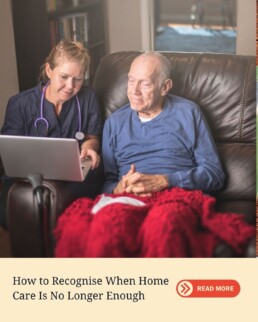
How to Recognise When Home Care Is No Longer Enough
How to Recognise When Home Care Is No Longer Enough
Most families don’t decide to move a loved one into a care home overnight. It happens gradually—a series of small moments that accumulate over months, sometimes years, until their weight becomes impossible to ignore.
Recognising when home care is no longer enough is one of the hardest calls a family will ever make. No formula or checklist gives you a definitive answer, and the guilt of even considering it can make the signs harder to see.
This article isn’t here to push anyone toward a decision. It’s here to help you name what you might already be sensing.
When safety becomes a constant worry
The most common thing families tell us is that they’ve stopped sleeping properly. They lie awake wondering whether mum has fallen, whether dad has left the gas on, whether anyone would know if something happened in the night.
That level of anxiety is not sustainable. More importantly, it’s usually a signal that the current situation isn’t actually safe—it just hasn’t gone wrong yet.
Falls are one of the biggest risks for older adults living at home. When someone has already had one or more falls, is unsteady on their feet, or their home environment can’t be safely adapted to reduce that risk, it’s worth asking whether home is still the safest place to be.
Medication errors are another common concern. Managing multiple medications — remembering what to take, when, and in what dose — becomes genuinely difficult for many people as cognitive ability changes. Without proper clinical oversight, missed doses, doubled doses, and dangerous combinations become more likely.
When the carer is running out
Family carers often take the longest to acknowledge how much they’re carrying. They reframe exhaustion as just being tired. They tell themselves that everyone finds it hard. They feel admitting they can’t cope betrays the person they’re caring for.
It isn’t. It’s the opposite.
A carer who is burned out, exhausted, or unwell cannot provide the standard of care their loved one needs and deserves. The relationship suffers. The care suffers. And the carer’s own health — physical and mental — suffers in ways that can take years to recover from.
If you are a family carer and haven’t slept well in months, if you’ve stopped doing things you used to do, or if you feel anxious or low most of the time, those aren’t signs of weakness. They’re signs that the situation has exceeded what one person can reasonably sustain.
When social isolation is setting in
One thing that happens gradually when someone is cared for at home—particularly if their mobility or cognitive ability has changed—is that their world gets smaller. Outings become less frequent. Visitors drop off. Days become similar to each other.
Social isolation in older adults is linked to serious health consequences, including depression, cognitive decline, and a weakened immune system. It’s not a minor concern.
A good care home provides something that home care rarely can: genuine daily community. Meals with others, activities, conversation, and relationships with staff who know you well. For many residents, moving into care is when their social life expands rather than contracts.
When medical complexity has increased
Some health changes require clinical oversight that isn’t available at home. Managing a complex condition like Parkinson’s, diabetes, heart failure, or advancing dementia requires consistent professional monitoring — not a carer doing their best with limited training, or a GP visiting once in a while.
When a loved one’s medical needs have grown beyond what home care can safely support, that’s not a failure of the family. It’s a recognition that the right level of care requires a professional environment.
When the person themselves is ready
This one surprises families sometimes. Many older people, once the conversation has been had honestly and kindly, are ready. They’ve been aware for a while that things aren’t working. They’ve worried about the burden they’re placing on the family. They feel lonely. They want more company, more activity, more support than they’re currently getting.
Fear of having the conversation can make families hold back longer than the person needs.
What tends to help
If you’re in this position, the most useful thing you can do is gather information without pressure. Speak to your loved one’s GP about their current needs. Arrange to visit a care home — not to make a decision, but to see what it actually looks like. Talk honestly with the people there about what you’re facing.
At Shipston Lodge, we have those conversations regularly. There’s no agenda or pressure. We know that the families who call us are usually already carrying a great deal, and the least we can do is listen properly and give straight answers.
If you’d like to talk through your situation, call us on 01608 698836. We’re here.
About the Author
The Shipston Lodge Care Team shares practical guidance, thoughtful insights, and helpful information for families considering residential, respite, and later-life care. Our articles are written with care, compassion, and a clear understanding of the questions families often have when choosing the right care home.

Dental Care That Comes to You: Shipston Lodge Partners with The Mobile Dentist
Dental Care That Comes to You: Shipston Lodge Partners with The Mobile Dentist
We have some exciting news to share with residents, families, and anyone considering Shipston Lodge for themselves or a loved one.
From today, Shipston Lodge has partnered with The Mobile Dentist to bring private dental care directly to our residents — here, on-site, in the comfort of their own home. And in keeping with everything else we offer, it is included as part of our all-inclusive weekly fee.
No extra charges. No trips out to a dental surgery. No navigating waiting lists. Just straightforward, professional dental care, provided by a qualified dentist who comes to you.
Why dental care in a care home matters
Dental health in later life is easy to overlook, and in the wider care sector it often is. Getting an elderly person to a dental appointment involves transport, coordination, physical effort, and for many residents — particularly those living with dementia or reduced mobility — real disruption and distress. The result is that dental care gets delayed, deprioritised, or simply doesn’t happen.
That’s a problem. Poor oral health in older adults is linked to difficulty eating, pain that can go unnoticed or unreported, increased infection risk, and a genuine reduction in quality of life. Good dental care isn’t a luxury. It’s part of looking after someone properly.
What the partnership with The Mobile Dentist provides
The Mobile Dentist brings a fully equipped dental service directly into care settings. Residents receive the same standard of professional care they would expect from a private dental practice — examinations, treatment, and ongoing dental support — without having to leave the building.
For residents at Shipston Lodge, this means:
Less disruption. No journey, no waiting room, no unfamiliar environment. The appointment happens in a place the resident already knows and feels comfortable in, which makes the whole experience far less stressful — especially for anyone who finds change or travel difficult.
Familiar faces. Our team is here throughout. Residents aren’t handed off to a new environment and left to manage alone. Our carers can be present for the appointment, providing reassurance and continuity in the way that only comes from knowing someone well.
Extra reassurance for families. Knowing that dental care is being looked after — properly, regularly, by a qualified professional — is one less thing for families to worry about. It’s the kind of detail that makes a genuine difference to peace of mind.
Part of our all-inclusive promise
This partnership matters to us for a specific reason. One of the things we are most proud of at Shipston Lodge is our all-inclusive model. When a resident moves in, their weekly fee covers everything — care, meals, activities, hairdressing, chiropody, physiotherapy, entertainment, outings, and more. No hidden extras. No uncomfortable conversations about additional costs.
Adding private dental care to that list is a meaningful step. It closes a gap that exists in most care settings, and it does so in a way that is consistent with the philosophy we have built this home around: that residents should never have to think about what is and isn’t included, and families should never be surprised by a bill.
Private dental care, provided on-site by a professional, is now simply part of what living at Shipston Lodge means.
A reflection of what we believe
We think about all-inclusive care as more than a pricing model. It’s a statement about how we believe older people deserve to be looked after — with every aspect of their health and wellbeing considered, not just the obvious ones.
Dental health is one of those things that slips through the cracks in too many care settings. We wanted to make sure it doesn’t slip through ours.
We’re proud to welcome The Mobile Dentist to Shipston Lodge, and we’re looking forward to seeing the difference this makes for our residents.
If you’d like to find out more about life at Shipston Lodge and everything included in our all-inclusive care, call us on 01608 698836 or get in touch through our contact page.