


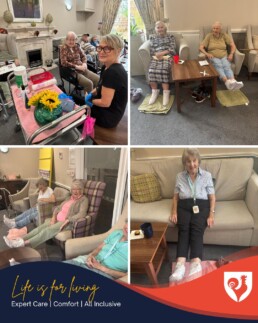
Check out our September 2026 Social Media posts
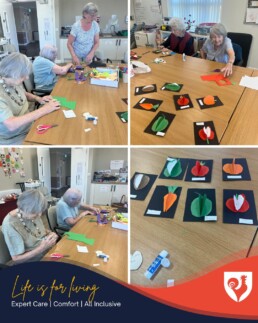
 Another brilliant session with the wonderful Wendy today!
Our residents love their arts and crafts time and Wendy always brings so much enthusiasm and creativity to the room. The concentration, the chat, the laughter — it’s one of those activities that just brings everyone together. 

The finished pieces are always something to be proud of. Well done everyone!
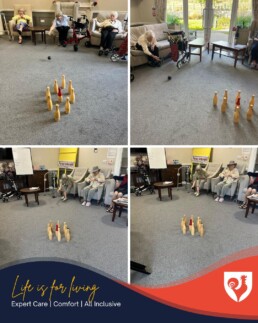
 Skittles season is open at Shipston Lodge and the competition is fierce!
Indoor skittles is always a massive hit — brilliant fun, great for coordination, and it turns out our residents are seriously good at it. The celebrations when those pins go down are absolutely priceless. 

Watch your back, we’ve got some serious talent here!
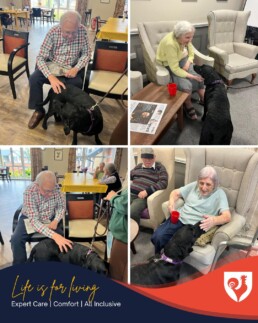
 Everyone say hello to Willow!
Willow popped in for a visit with her family today and went down an absolute treat. There is something truly special about the moment a dog walks through the door — the smiles are instant and the cuddles are non-stop. 

Thank you Willow for brightening up our day. You are welcome here any time!
 What an incredible afternoon with Chris the Piano Man !
Completely self-taught and unable to read a single note of music yet this man can play absolutely anything. The talent is just unreal. 
Our residents were thoroughly entertained and the atmosphere was brilliant. Chris, you are welcome back any time! 
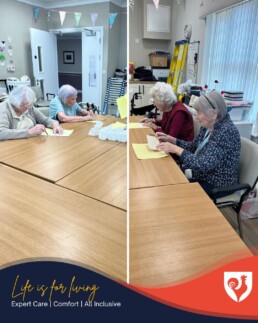
Creativity is in full flow at Shipston Lodge!
Our residents have been busy at arts and crafts today and the concentration levels are seriously impressive. There is something so calming and satisfying about making something with your hands — and the results are always brilliant.
Watch this space for the finished masterpieces!
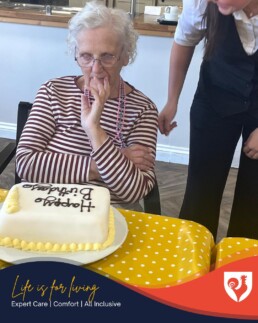
 Wishing the most wonderful Pauline a very happy birthday!
We hope you had the most special day celebrating with us — you absolutely deserve to be spoiled! Here’s to you Pauline, what a star you are. 

Meet the wonderful Shiela (and yes, that’s exactly how you spell it!
Shiela recites poems every single day and we could listen to her all afternoon. This one is a particular favourite of hers – and it’s not hard to see why she loves it so much.
There is so much talent, warmth and character in this home and Shiela reminds us of that every single day. 
 Parachute day and the residents absolutely loved it!
We took the parachute to both communities today and the fun was infectious. It’s not just a great laugh — parachute play is brilliant for hand eye coordination and gets everyone working together to keep those balls in the air. Teamwork at its finest! 
Moments like these are exactly why we love what we do. 
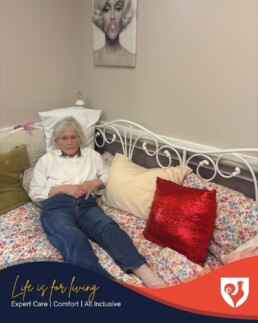
Meet Pauline and her beloved baby doll Emily, enjoying a peaceful rest on our brand new day bed!
We recently installed this beautiful bed in one of our communal areas specifically to give our residents a calm, comfortable space to rest and recharge during the day. It’s been particularly wonderful for residents who experience sundowning, giving them a safe and soothing place to relax whenever they need it.

Sing Along with Jane
 There is nothing quite like the power of music to bring people together!
We love getting both of our communities together on the memory care floor for a good old fashioned sing along — and we are so lucky to have Jane with us. The incredibly talented granddaughter of a renowned conductor, Jane can play absolutely any song by ear filling the home with music and pure joy.
 What an absolutely gorgeous day! Carol and Julie treated our lovely ladies to some wonderfully relaxing spa treatments — and it’s safe to say they were very well looked after!
The foot spas were such a hit that they’re now a permanent fixture in our activities calendar. And honestly, why wouldn’t they be? Everyone deserves a little pampering! 

Siblings Who Disagree: How to Make a Family Decision About Care
Siblings Who Disagree: How to Make a Family Decision About Care
It’s more common than people admit. One sibling thinks mum needs to move into a care home. Another thinks she’s managing fine. A third lives two hundred miles away and feels guilty about not being there. And somewhere in the middle of all of it is the person the decision is actually about — who may have very clear views of her own, or who may be frightened to say what she really thinks.
Family disagreements about care are normal. They don’t mean something has gone wrong with your family. They mean you’re all grappling with something genuinely hard.
Here’s what tends to help.
Start with the person, not the decision.
The most common reason family conversations about care go in circles is that everyone is starting from a different place. One person is focused on safety. Another is focused on independence. A third is worried about cost. And nobody has actually asked the person at the centre of it all what they want.
That’s the right place to start. Not “should mum go into a care home?” but “what does mum want her life to look like, and what does she need to feel safe and happy?”
When the conversation starts there, a lot of the other disagreements become easier to navigate. You’re no longer arguing about what’s convenient or what feels right to each of you. You’re working together toward something you all share — your loved one’s well-being.
Acknowledge what’s underneath the disagreement.
People rarely disagree about care for purely practical reasons. Underneath most family arguments about this subject, there is guilt, grief, fear, and love — often in equal measure.
The sibling who resists a care home may be carrying guilt about not being able to do more themselves. The one who is pushing for a move may be exhausted and frightened by what they’ve been witnessing at home. The one who lives far away may feel they don’t have the right to an opinion, or that they’re the only one seeing things clearly.
Naming these feelings — even briefly, even imperfectly — usually helps more than trying to argue past them with logic.
Bring in outside voices.
If the family conversation keeps going in circles, it sometimes helps to involve someone outside it. A GP who knows your loved one well can speak honestly about their current health and what level of support they need. A social worker can carry out a needs assessment that gives everyone a shared, objective starting point. A care home manager can answer questions and give the family a chance to see what residential care actually looks like — which is often very different from what people imagine.
We regularly welcome families for visits where one member is certain, and another is uncertain. That’s completely fine. Our job on those visits is not to persuade anyone of anything. It’s to answer questions honestly and let families see for themselves.
Give it time — but not too much.
Most disagreements about care soften with time and information. The family member who says no in March often says yes in May, once they’ve visited a home, had their questions answered, and had a few more honest conversations.
But sometimes time itself is the risk. If someone is unsafe at home, if a carer is reaching the point of breakdown, if a health crisis is becoming more likely — waiting for full family consensus can cause real harm.
In those situations, it can help to agree on a trial. A short respite stay gives a family the chance to see how their loved one settles, without the pressure of a permanent decision. Many of our long-term residents originally came to us for a two-week respite stay.
What we’d suggest
If your family is stuck, come and visit us together. Bring the sibling who is uncertain. Bring the resistant one. Ask us the hard questions. Walk around the home, talk to our team, and see what life here actually looks like.
We find that most disagreements shrink once everyone is in the same room, looking at the same things, and having the same conversation.
You don’t have to have it all figured out before you call us. Most families don’t.
To arrange a visit or have a conversation, call us on 01608 698836 or contact us through our website. There’s no pressure and no obligation — just a chance to get some answers.
What Happens When a Resident's Needs Change
What Happens When a Resident’s Needs Change
One of the questions families most want to ask — but often don’t — is this: what happens if things get harder?
It’s completely understandable. When you’re in the middle of researching care homes, trying to make the right decision for someone you love, the last thing you want to think about is what comes next after that. But it’s one of the most important questions you can ask, and it deserves a straight answer.
The fear behind the question
Many families carry a quiet worry that a care home is only a temporary solution. That one day, a nurse will sit them down and explain that their mother’s needs have become too complex, that the home can no longer support her, and that they’ll need to start the whole process again — finding somewhere new, breaking the news, helping someone they love settle into yet another unfamiliar place.
That fear is legitimate. It happens in some settings. But it doesn’t have to.
How care needs typically change
For many residents, needs do increase gradually over time. Someone who moves into residential care primarily for companionship and daily support may, months or years later, need more clinical input — help managing a complex medication regimen, support following a fall, or closer monitoring of a long-term health condition.
In a home without qualified nursing staff, this can create a genuine problem. The home reaches the limit of what it can safely provide, and the resident has to move.
At Shipston Lodge, we have registered nurses on site every day. That changes the picture significantly. This means we can monitor health proactively, respond to changes quickly, and support a much wider range of clinical needs than a standard residential setting—without the resident having to go anywhere.
What a care plan review actually looks like
Care plans at Shipston Lodge are living documents. They’re not written on admission and filed away. We review them regularly and update them whenever something changes — whether that’s a new diagnosis, a mobility shift, a change in how someone eats or sleeps, or feedback from the resident about what they want.
When our nursing team notices a change, we don’t wait for a formal review date. We act. We speak to the family. We bring in the right people — a GP, a physiotherapist, a specialist — and we adjust the care accordingly.
Families are always part of that conversation. Nothing changes without you knowing about it and being involved in the decision.
What we can support on-site
Because Shipston Lodge provides both residential and nursing care, we can support a wide range of needs. This includes residents managing long-term conditions such as Parkinson’s, COPD, diabetes, and heart failure, as well as those living with dementia who need a higher level of daily support as time goes on.
Our all-inclusive model matters here too. No additional charges apply when care needs increase. The weekly fee covers whatever level of support a resident needs. Families never face a conversation where more care means more cost.
When a move might still be necessary
It would be dishonest to say that every resident stays with us forever regardless of circumstance. There are situations — highly specialist dementia care, for example, or a level of acute medical need that requires a hospital setting — where a different environment is genuinely in the resident’s best interest.
But these situations are far less common than families fear. In most cases, when needs change at Shipston Lodge, we adapt with them — not by asking a family to start again.
The honest answer
If you’re visiting care homes and this question is sitting at the back of your mind, ask it. Ask every home you visit. Listen carefully to how they answer it.
Our answer is this: we adapt with you. We have the nursing expertise, the care planning processes, and the genuine commitment to make sure that when things get harder, we get stronger—so the person you love doesn’t have to face the upheaval of moving again.
That’s what it means to be someone’s home, not just their care provider.
If you’d like to talk through your family’s situation and ask us any questions about how we support changing needs, please call us on 01608 698836 or get in touch via our contact page.
Check out our August 2026 Social Media posts
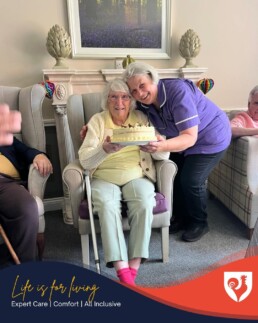
Happy Birthday Vivien!
We celebrated the wonderful Vivien’s birthday and what a lovely occasion it was! Residents gathered together to share a beautiful cake and help make Vivien’s special day as joyful and memorable as it deserved to be. 
Moments like these are what life at Shipston Lodge is all about. Good company, lots of love and of course, a very good slice of cake!

 A Beautiful Monthly Church Service at Shipston Lodge
We had an amazing turnout for our monthly church service here at Shipston Lodge, with residents coming together for a meaningful and reflective time of worship.
Due to the recent drought, the service focused on the importance of water, reminding us all of how precious it is in our daily lives and in the world around us. It was a thoughtful and moving theme, enjoyed by everyone who attended.
Meet Charlie, Our Wonderful Sensory Dog
We are delighted to welcome Charlie, a wonderful new addition to our Memory Care community here at Shipston Lodge.
Charlie is a very special sensory dog who can bark, pant and even has a heartbeat, bringing comfort, companionship and joy to our residents. He has quickly become a much-loved part of the home and is being adored by everyone.

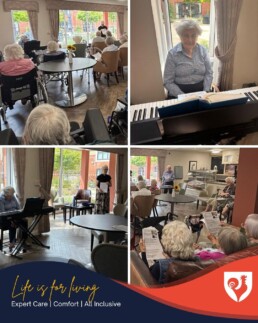
 Fabulous Music with Barry Jukes
We were delighted to welcome the very talented Barry Jukes to Shipston Lodge for another splendid afternoon of music, memories and entertainment.
Barry treated everyone to a wonderful array of songs from the 1950s, 60s and 70s, bringing back fond memories and encouraging plenty of singing along. Residents thoroughly enjoyed the familiar tunes, the lively atmosphere and the chance to share such a joyful afternoon together.
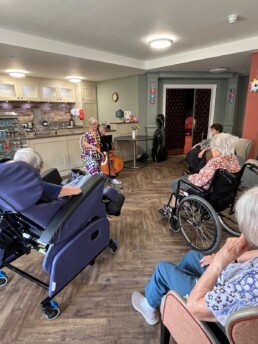
 A Magical Afternoon with Corinne the Cellist!
What an absolutely enchanting session we had at Shipston Lodge with the incredibly talented Corinne! Her beautiful cello playing filled our home with the most wonderful music, from stunning classical pieces to familiar favourites that had residents singing along with the biggest smiles.
There is something truly special about live music and the joy it brings to our community. Thank you so much Corinne for such a magical afternoon. We hope to welcome you back very soon!
Music, Movement and Fitness with the Fabulous Yvette!
Magical as always! Our latest Music, Movement and Fitness session with the wonderful Yvette and our brilliant Shipston Lodge carers had everyone moving, singing and smiling from start to finish.
Yvette never fails to bring the most incredible energy to our home and seeing residents and carers joining in together makes it all the more special. These sessions are truly one of the highlights of our week and it shows!
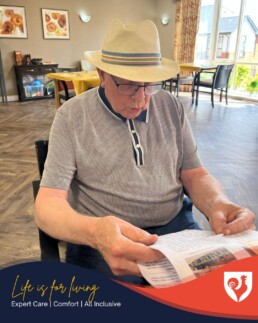
 Daily Sparkle Time at Shipston Lodge!
There is always so much to talk about when the Daily Sparkle comes out! Our residents love gathering together to read through the latest edition, sharing fascinating facts, sparking memories and enjoying some wonderful conversations along the way.
 Catch, Throw and Lots of Laughs with Grace!
Our residents had a brilliant time testing their catching and throwing skills with the wonderful Grace, one of our fantastic carers! There was plenty of concentration, plenty of laughter and more than a few impressive catches along the way!
It is so lovely to see our carers bringing that extra bit of fun and energy to everyday moments. Grace you are a star!
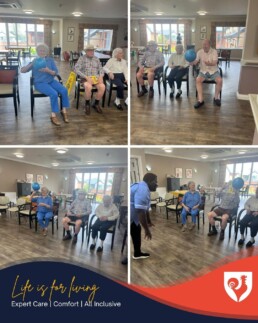
 Seated Yoga with the Wonderful Hayley!
What a fantastic session we had today with the brilliant Hayley! It is always so wonderful to see so many of our residents turning up and getting involved, and today was no exception. The room was full of focus, calm and plenty of smiles!
Staying active is so important for our residents and seated yoga is just perfect, keeping everyone flexible, strong and mobile while the breathing exercises bring a lovely sense of calm and relaxation to the whole group.
Happy International Dog Day from Ronnie!
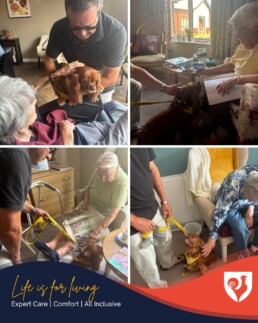
In celebration of International Dog Day, we want to give a very special shoutout to the wonderful Ronnie (Veronica), our incredible PAT Therapy dog, who visited our residents today and brought the most beautiful joy and warmth to our home!
Ronnie is always such a welcome and well-loved visitor and our residents absolutely light up every single time she arrives. She certainly earned her dog treats today! 

Taylor & Taylor Care | Leaders in Care Awards 2026 Finalist
Taylor & Taylor Care Named Finalist at the Leaders in Care Awards 2026
We have some brilliant news to share.
Taylor & Taylor Care — the family behind Shipston Lodge — has been selected as a finalist in the Care Provider of the Year (Independent) category at the Leaders in Care Awards 2026.
The Leaders in Care Awards are run by Care Home Professional and Home Care Insight, and they cover 25 categories recognising the very best care homes, home care companies, suppliers, and individuals working across the adult social care sector. To be shortlisted is a genuine honour, and we are incredibly proud to see Taylor & Taylor Care named among this year’s finalists.
The winners will be announced at a black-tie awards ceremony on Tuesday 6th October 2026 at the Forest of Arden Hotel and Country Club in Meriden, Birmingham — an evening that includes a champagne reception, three-course dinner, entertainment from Care Sector’s Got Talent winners, and the awards ceremony itself.
What this recognition means to us
Care Provider of the Year (Independent) is one of the most meaningful categories in the sector, because it reflects everything that goes into running a care home — not just the quality of care on any given day, but the values, the culture, the people, and the commitment that holds it all together over years and years.
At Shipston Lodge, we have always believed that excellent care starts with treating every resident as an individual, and every family as part of our community. This recognition belongs as much to our team — the nurses, carers, activity staff, kitchen team, and everyone else who shows up every day with that belief at the heart of what they do — as it does to Taylor & Taylor Care as an organisation.
We have been doing this since 2003. This shortlist is a reminder of why it matters.
What happens next
The ceremony takes place on Tuesday 6th October at the Forest of Arden Hotel and Country Club, Maxstoke Lane, Meriden, Birmingham CV7 7HR.
Doors open at 7pm for a reception, the event runs from 8pm until 10.45pm, and the bar stays open until midnight.
We will be there on the night, and we will of course share the result with everyone here at Shipston Lodge, with our residents’ families, and with all of you following along.
Wish us luck — and thank you, as always, for being part of what we do here.
Check out our July 2026 Social Media posts
Fab Fun, Music, Movement & Fitness with Yvette!
Another fantastic session with Yvette brought plenty of music, movement, fitness and fun to Shipston Lodge.
Residents thoroughly enjoyed joining in with the exercises, singing along to familiar tunes and sharing lots of laughter throughout the afternoon.

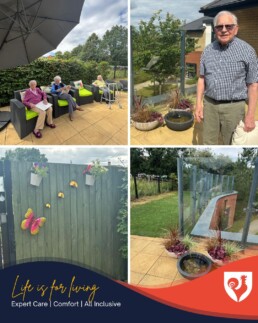
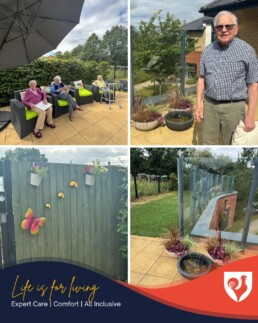
 Sunshine, Fresh Air & Our Beautiful New Terrace!
Our residents in our memory care community have been making the most of the gorgeous sunshine on our newly revamped terrace, and we think it is safe to say they absolutely love it!
Seeing everyone relaxing, laughing and enjoying the fresh air together in such a lovely space is truly wonderful. There is nothing quite like a bit of sunshine to lift the spirits and bring everyone together. Here is to many more beautiful days ahead! 

 Hats, Happiness & Royal Ascot Fun!
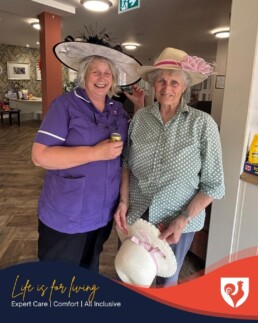
Last week Shipston Lodge got into the Royal Ascot spirit in the most wonderful way! Residents dressed up in their finest hats and enjoyed a brilliant afternoon sweepstake on the races, all just for fun of course!
The excitement, the laughter and the friendly competition made for a truly joyful afternoon. Whether your horse romped home or not, everyone was a winner on the day! A fabulous afternoon all round. 

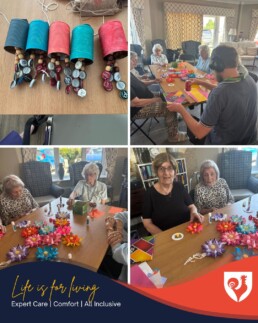
 Flowers, Creativity & a Wonderful Afternoon with Greg!
What a creative afternoon we had at Shipston Lodge! Our talented volunteer Greg spent time with residents teaching them how to make the most beautiful handcrafted flowers, which are now proudly decorating our home.
It was a joy to see everyone absorbed in such a lovely activity, with creativity flowing and smiles all round. A huge thank you to Greg for sharing your time and talent with us. Our home looks even more beautiful thanks to you!
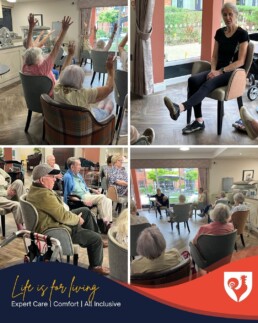

 A Relaxing Seated Yoga Session with Hayley
Our residents enjoyed another wonderful seated yoga session with Hayley, taking time to stretch, strengthen and relax together. These gentle exercises are a fantastic way to support flexibility, mobility and overall wellbeing in a calm and friendly environment.
It’s always lovely to see so many residents getting involved, leaving the session feeling refreshed, energised and ready for the rest of the day. Thank you, Hayley, for another brilliant class!
 Enjoying the Garden in the Summer Sunshine
With the warmer weather upon us, our residents have been making the most of the garden, relaxing in the cool shade of the umbrellas while enjoying the fresh air and beautiful surroundings.
Whether chatting with friends, watching the garden come to life or simply soaking up the peaceful atmosphere, it’s a lovely way to spend a summer afternoon here at Shipston Lodge.
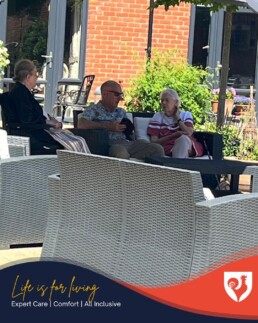
Soaking Up the Sunshine on Our Beautiful New Terrace!
When the temperature is just right, you will find our residents making the most of our newly revamped terrace and loving every minute of it! 
There is something so lovely about sitting outside, enjoying the fresh air and taking in the surroundings together. Our terrace has quickly become one of the most popular spots in the home and it is wonderful to see it getting so much well-deserved use. Here is to many more perfect outdoor moments!
 Home is Where the Heart Is
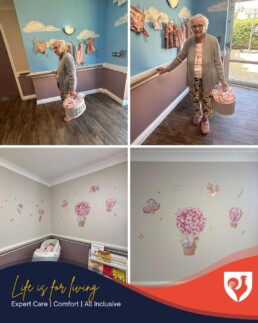
On our memory care floor, our wonderful staff have been busy creating beautiful imagination stations designed to bring comfort, familiarity and a real sense of home to our residents.
Pauline is a particular fan and loves nothing more than hanging out the washing, just as she always has done. Seeing that spark of joy and recognition in her face is exactly why we do what we do. These little moments of everyday life mean the world, and we are so proud of the thoughtful, loving care our team brings to each and every day.
The Role of Spiritual Wellbeing in Care Home Life
Understanding Spiritual Wellbeing in Care Homes
Spiritual wellbeing in care homes is increasingly recognised as a vital dimension of later-life care, shaping how residents experience meaning, comfort, connection, and dignity in what are often the final chapters of their lives. Evidence from gerontology, nursing, palliative care, and long-term care research shows that attention to spiritual needs is associated with higher quality of life, reduced loneliness, better mental health, stronger coping with illness and loss, and even improved physical and service-use outcomes such as shorter hospital stays and reduced mortality (source).
Defining Spiritual Wellbeing
Spiritual wellbeing is a broad and deeply personal concept that extends beyond formal religion to encompass the entire spectrum of what gives a person hope, purpose, and peace. This includes church services and hymns, quiet reflection, time in nature, music, memories, relationships, or cherished beliefs and values (source).
Spiritual Care in Practice
Spiritual care involves recognising and responding to the needs of the human spirit. This includes facilitating religious care from an individual’s own faith leader or community, supporting participation in religious practices and traditions, and creating opportunities for personal reflection, storytelling, relationships, and engagement with nature and creativity (source). Care homes can enhance spiritual care by incorporating activities like art therapy, music sessions, and nature walks that allow residents to connect with their inner selves and the world around them. Moreover, care homes can offer workshops or group discussions that encourage residents to share personal stories and experiences, fostering a deeper sense of community and mutual understanding.
The Importance of Spiritual Wellbeing
For families and individuals considering or living in care homes, understanding the role of spiritual wellbeing is central to evaluating whether a home offers truly holistic, person-centred care. Spiritual wellbeing is not an abstract or marginal concern; it is intimately woven into how residents understand themselves, cope with change, and find reasons to hope and derive satisfaction from daily life. A focus on spiritual wellbeing can transform a care home from a place of mere residence to a nurturing community where residents feel valued and understood (source).
Personalised Spiritual Care
Personalised spiritual care supports emotional comfort and connection. Whether through faith, music, reflection, or simply moments of peace, care should support what brings each resident comfort, meaning, and connection. This approach respects the deeply personal nature of spiritual wellbeing and ensures that care homes nurture the whole person—body, mind, and spirit. By engaging residents in activities that align with their personal beliefs and preferences, care homes can foster a sense of belonging and community, which is crucial for emotional and mental health. Additionally, facilitating regular feedback sessions with residents and their families can help tailor spiritual care to better meet individual needs and preferences, thus enhancing the overall care experience.
Key Takeaways
- Spiritual wellbeing is vital for quality of life in care homes.
- It encompasses more than religion, including music and reflection.
- Personalised spiritual care supports emotional comfort and connection.
- Holistic approaches nurture residents’ body, mind, and spirit.
- Engagement in meaningful activities enhances residents’ sense of belonging.
FAQs
What is spiritual wellbeing in care homes?
Spiritual wellbeing in care homes refers to the dimension of care that addresses residents’ needs for meaning, purpose, and connection, often through religious or spiritual practices.
Why is spiritual wellbeing important in care homes?
It enhances residents’ quality of life, providing comfort, reducing loneliness, and supporting mental health.
How can care homes support spiritual wellbeing?
Care homes can support spiritual wellbeing through personalised care plans that include religious services, music, reflection, and creative activities.
Is spiritual care the same as religious care?
No, spiritual care includes but is not confined to religious care. It also involves non-religious practices that provide emotional comfort and connection.
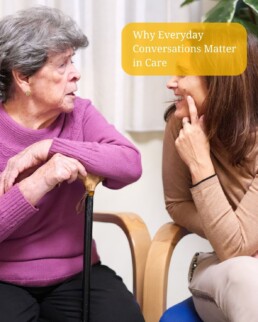
Why Everyday Conversations Matter in Care
The Heart of Care: Everyday Conversations
In the context of care homes, it’s easy to focus on the tangible aspects of care—medication, meals, and physical support. Yet, it’s often the quieter, everyday interactions that truly enrich a resident’s life. These meaningful conversations in care homes—from chats over tea to shared jokes—are not mere niceties but vital components of high-quality care. Such interactions can significantly improve the residents’ emotional wellbeing, fostering a deeper sense of connection and community.
Key Takeaways
- Meaningful conversations are foundational to high-quality care.
- They support emotional wellbeing and reduce loneliness.
- Such interactions are central to person-centred care.
- Conversational engagement fosters a sense of belonging and purpose.
- Overcoming challenges requires supportive organizational conditions.
Defining Meaningful Conversations
Meaningful conversations are more than just verbal exchanges; they are interactions where staff engage with residents as individuals, showing genuine interest and addressing emotional needs. These conversations, whether brief or extended, are characterised by attentiveness and respect, forming the backbone of person-centred care.
Research highlights that such interactions help residents feel known and valued, reducing loneliness and supporting mental health. According to a study, approximately 61% of care home residents experience moderate loneliness, underscoring the importance of these daily interactions.
Moreover, these conversations often reveal personal histories, preferences, and stories that can guide personalized care plans. For instance, knowing a resident’s favorite music or past hobbies can help staff organize activities that resonate with them, further enhancing their quality of life. This approach ensures that care is not just about meeting physical needs but also about nurturing the soul and spirit of the residents.
Building Relationships Through Conversation
At the core of relationship-centred care is the belief that all care occurs within the context of relationships. This approach emphasises recognising each person’s individuality and the reciprocal nature of care relationships. Through meaningful conversations, staff and residents acknowledge each other’s personhood, share emotions, and influence each other’s wellbeing.
Programs like the My Home Life England initiative promote these principles, advocating for a care environment where residents, families, and staff experience a sense of security, belonging, and purpose through conversational engagement. Such programs often include training for staff to enhance their communication skills, ensuring they can effectively engage with residents on a personal level. These skills are crucial in creating a nurturing environment where everyone feels valued and understood.
Challenges and Opportunities
While the benefits of meaningful conversations are clear, they require supportive organisational conditions. Stable staffing, leadership that values social interaction, and an environment conducive to sociability are essential. However, challenges such as time constraints and language barriers can impede these interactions.
Despite these challenges, the ethical importance of everyday conversational care cannot be overstated. It reinforces dignity, autonomy, and inclusion, ensuring residents are listened to and involved in decisions about their care. Innovative solutions, such as using technology to facilitate communication or employing multilingual staff, can help overcome some of these barriers. Additionally, creating spaces within care homes that encourage social interaction can further support these vital conversations.
Conclusion: The Power of Listening
In our view, the most meaningful moments in care are not always grand events but the quiet conversations that make residents feel seen and heard. Taking time to listen is one of the simplest yet most powerful forms of care, transforming routine interactions into moments of genuine connection. This practice not only improves the residents’ quality of life but also enriches the caregivers’ experience, fostering a more fulfilling work environment. By prioritizing these interactions, care homes can create a more compassionate and inclusive atmosphere for everyone involved.
FAQs
Why are meaningful conversations important in care homes?
Meaningful conversations help reduce loneliness, support emotional wellbeing, and enhance the quality of life for residents.
How do these conversations support person-centred care?
They allow staff to engage with residents as individuals, addressing both emotional and physical needs, which is central to person-centred care.
What challenges affect meaningful conversations in care homes?
Time constraints, staffing issues, and language barriers can hinder these interactions.
How can care homes foster meaningful conversations?
By creating a supportive environment with stable staffing and leadership that values social interaction.
What role does technology play in facilitating conversations?
Technology can bridge communication gaps, especially for residents with hearing difficulties or language barriers, enhancing interaction quality.