
How We Support Residents After Hospital Discharge

How We Support Residents After Hospital Discharge

How We Support Residents After Hospital Discharge

Leaving the hospital can be a relief, but it can also feel daunting. For many older people and their families, discharge brings new questions, temporary setbacks and the need for additional support. Whether recovery is expected to be short-term or ongoing, the period immediately after hospital discharge is a crucial time. At Shipston Lodge, we focus on providing a smooth, reassuring transition that prioritises comfort, safety and confidence.

Support begins well before a resident arrives. Our team works closely with hospital staff, GPs and other health professionals to understand medical needs, medication requirements and any changes in mobility or care routines. This careful preparation ensures that care plans are in place from the outset, reducing uncertainty and helping residents feel secure from their very first day.
On arrival, residents are welcomed into a calm, familiar environment designed to promote rest and recovery. Hospital stays can be tiring and disorienting, so the initial focus is often on allowing residents time to settle, relax and regain their bearings. There is no pressure to adjust quickly or take part in activities straight away. Instead, support is guided by how each individual is feeling, both physically and emotionally.
The early days following discharge are often when reassurance matters most. Residents may feel anxious about their health, worried about regaining strength, or unsettled by changes in routine. Our care team provides gentle encouragement alongside practical support, helping residents rebuild confidence at their own pace. Simple, consistent routines can make a significant difference, offering a sense of stability and normality during recovery.
Physical well-being is carefully monitored during this period. Changes in mobility, appetite, or energy levels are closely monitored, allowing care to be adapted as needed. Support may include assistance with safe movement, gentle encouragement for movement, or help with daily tasks while strength returns. The aim is always to support independence where possible, while ensuring residents feel safe and well cared for.
Medication management is another important part of post-hospital support. Changes to prescriptions are common following a hospital stay, and clear communication helps ensure medications are administered accurately and consistently. This careful approach reduces the risk of confusion or missed doses, giving both residents and families peace of mind.
Emotional well-being is given equal importance. Hospital environments can feel impersonal, leaving residents unsettled or vulnerable. At Shipston Lodge, familiar faces, warm conversations and a welcoming atmosphere help residents feel at ease. Time is taken to listen, offer reassurance and respond sensitively to any concerns, recognising that recovery is as much emotional as it is physical.
Families are supported throughout the transition. We understand that loved ones often carry their own worries following a hospital discharge, particularly if care needs have changed. Open communication helps families stay informed and involved, offering reassurance and clarity during what can be an uncertain time. Questions are welcome, and updates are shared with care and transparency.
Nutrition and hydration also play a vital role in recovery. Thoughtfully prepared meals, familiar flavours and flexible dining options support appetite and comfort. Mealtimes are unhurried, allowing residents to eat at their own pace while enjoying the social and emotional benefits of shared dining if they wish.
As recovery progresses, care plans are reviewed and adapted to reflect changing needs. Some residents may regain strength quickly, while others benefit from ongoing support. This flexible approach ensures care continues to feel appropriate, respectful and responsive, rather than fixed or restrictive.
For some families, Shipston Lodge provides short-term support following discharge, offering respite and reassurance during recovery. For others, it becomes a longer-term solution that provides stability and continuity of care. In both cases, the focus remains the same: compassionate support, individual attention and a strong sense of reassurance.
At Shipston Lodge, we recognise that the period after hospital discharge can shape residents’ feelings about their care and their confidence moving forward. By offering thoughtful preparation, gentle support and open communication, we help residents and families feel supported, reassured and confident during this important transition.


The Role of Gentle Exercise and Movement in Maintaining Mobility

The Role of Gentle Exercise and Movement in Maintaining Mobility

The Role of Gentle Exercise and Movement in Maintaining Mobility

Maintaining mobility is about far more than physical strength. It supports confidence, independence, and emotional well-being, helping older adults continue to engage with life in a meaningful way. At Shipston Lodge, gentle exercise and movement are woven naturally into daily routines, always guided by comfort, safety, and enjoyment.

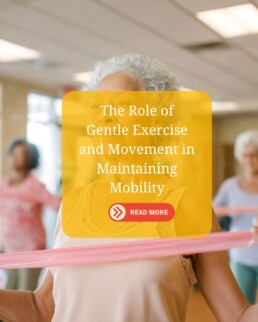
Movement does not need to be strenuous to be effective. Simple, guided activities such as stretching, seated exercises, and balance work can help maintain flexibility, coordination, and muscle tone. These small movements support everyday tasks, from standing up comfortably to walking with greater confidence.

Gentle exercise also plays a key role in reducing the risk of falls. By focusing on balance and strength, residents are supported to move more securely, helping them feel safer and more independent in their surroundings. This sense of confidence can positively impact overall well-being, encouraging residents to stay active and engaged.

Beyond the physical benefits, movement supports mental and emotional health. Exercise stimulates circulation and can help improve mood, reduce anxiety, and support better sleep. Group sessions also offer opportunities for social interaction, laughter, and shared encouragement, which are just as important as the exercise itself.
Activities are always adapted to individual needs and abilities. Some residents may enjoy structured sessions led by trained staff, while others prefer gentle movement incorporated into daily activities. The focus is never on performance but on comfort, reassurance, and enjoyment.
Outdoor movement, when weather permits, adds another layer of benefit. Fresh air, natural light, and familiar surroundings can enhance mood and motivation, making movement feel less like exercise and more like a pleasurable part of the day.
Families often find reassurance in knowing that mobility is proactively supported rather than reactively. By encouraging regular, gentle movement, Shipston Lodge helps residents maintain their abilities for as long as possible, while respecting personal limits and preferences.
In this way, movement becomes a positive and empowering experience. It supports independence, boosts confidence, and contributes to a sense of well-being that extends well beyond physical health.


Supporting Dignity in Later Life: What It Means in Everyday Care

Supporting Dignity in Later Life: What It Means in Everyday Care

Supporting Dignity in Later Life: What It Means in Everyday Care

Dignity is one of those words that is often used when talking about care, yet it can mean very different things in practice. At Shipston Lodge, dignity is not an abstract principle or a policy document. It is something lived and demonstrated every day through small, thoughtful actions that shape how residents feel about themselves.

At its heart, dignity is about recognising each person as an individual. Every resident arrives with their own history, preferences, routines and sense of self. Supporting dignity means honouring those differences rather than fitting people into a rigid structure. From how residents are addressed to how their daily routines are supported, care is shaped around the person, not the timetable.
Privacy plays a central role in dignified care. Residents are supported in ways that protect their personal space and their right to choose. Whether it is knocking before entering a room, offering discreet assistance with personal care, or allowing residents to decide who supports them and when, these moments reinforce a sense of control and respect.
Choice is equally important. Dignity is closely linked to autonomy, even when care needs increase. Residents are encouraged to make decisions about their day, from what they wear to how they spend their time. For some, that might mean enjoying a quiet morning with a newspaper and a cup of tea. For others, it may involve social activities or time outdoors. What matters is that these choices are listened to and respected.
Communication also underpins dignity. Being spoken to with warmth, patience and clarity helps residents feel valued and understood. Care teams take time to listen, explain and reassure, particularly during moments of change or uncertainty. Even when words are limited, body language, tone and presence play a powerful role in preserving dignity.
Families often worry that moving into care means losing independence or identity. In reality, dignified care aims to protect both. By supporting residents to do as much as they can for themselves and stepping in only when needed, confidence is maintained and self-esteem preserved.
Dignity is also reflected in how care adapts over time. As needs change, support is adjusted sensitively, with careful consideration for emotional well-being as well as physical health. This thoughtful approach helps residents feel safe, respected and secure, even during challenging moments.
Ultimately, dignity is not defined by grand gestures. It is found in consistency, kindness and respect. At Shipston Lodge, it is these everyday actions that ensure residents continue to feel valued, heard and truly cared for.