
Siblings Who Disagree: How to Make a Family Decision About Care
It’s more common than people admit. One sibling thinks mum needs to move into a care home. Another thinks she’s managing fine. A third lives two hundred miles away and feels guilty about not being there. And somewhere in the middle of all of it is the person the decision is actually about — who may have very clear views of her own, or who may be frightened to say what she really thinks.
Family disagreements about care are normal. They don’t mean something has gone wrong with your family. They mean you’re all grappling with something genuinely hard.
Here’s what tends to help.
Start with the person, not the decision.
The most common reason family conversations about care go in circles is that everyone is starting from a different place. One person is focused on safety. Another is focused on independence. A third is worried about cost. And nobody has actually asked the person at the centre of it all what they want.
That’s the right place to start. Not “should mum go into a care home?” but “what does mum want her life to look like, and what does she need to feel safe and happy?”
When the conversation starts there, a lot of the other disagreements become easier to navigate. You’re no longer arguing about what’s convenient or what feels right to each of you. You’re working together toward something you all share — your loved one’s well-being.
Acknowledge what’s underneath the disagreement.
People rarely disagree about care for purely practical reasons. Underneath most family arguments about this subject, there is guilt, grief, fear, and love — often in equal measure.
The sibling who resists a care home may be carrying guilt about not being able to do more themselves. The one who is pushing for a move may be exhausted and frightened by what they’ve been witnessing at home. The one who lives far away may feel they don’t have the right to an opinion, or that they’re the only one seeing things clearly.
Naming these feelings — even briefly, even imperfectly — usually helps more than trying to argue past them with logic.
Bring in outside voices.
If the family conversation keeps going in circles, it sometimes helps to involve someone outside it. A GP who knows your loved one well can speak honestly about their current health and what level of support they need. A social worker can carry out a needs assessment that gives everyone a shared, objective starting point. A care home manager can answer questions and give the family a chance to see what residential care actually looks like — which is often very different from what people imagine.
We regularly welcome families for visits where one member is certain, and another is uncertain. That’s completely fine. Our job on those visits is not to persuade anyone of anything. It’s to answer questions honestly and let families see for themselves.
Give it time — but not too much.
Most disagreements about care soften with time and information. The family member who says no in March often says yes in May, once they’ve visited a home, had their questions answered, and had a few more honest conversations.
But sometimes time itself is the risk. If someone is unsafe at home, if a carer is reaching the point of breakdown, if a health crisis is becoming more likely — waiting for full family consensus can cause real harm.
In those situations, it can help to agree on a trial. A short respite stay gives a family the chance to see how their loved one settles, without the pressure of a permanent decision. Many of our long-term residents originally came to us for a two-week respite stay.
What we’d suggest
If your family is stuck, come and visit us together. Bring the sibling who is uncertain. Bring the resistant one. Ask us the hard questions. Walk around the home, talk to our team, and see what life here actually looks like.
We find that most disagreements shrink once everyone is in the same room, looking at the same things, and having the same conversation.
You don’t have to have it all figured out before you call us. Most families don’t.
To arrange a visit or have a conversation, call us on 01608 698836 or contact us through our website. There’s no pressure and no obligation — just a chance to get some answers.
Related News

Dental Care That Comes to You: Shipston Lodge Partners with The Mobile Dentist
Dental Care That Comes to You: Shipston Lodge Partners with The Mobile Dentist We have some…

Check out our September 2026 Social Media posts
Another brilliant session with the wonderful Wendy today! Our residents love their…
The Role of the Registered Nurse in a Residential Care Home
The Role of the Registered Nurse in a Residential Care Home When families compare care homes,…
What Happens When a Resident’s Needs Change
What Happens When a Resident’s Needs Change One of the questions families most want to ask…

Check out our August 2026 Social Media posts
Happy Birthday Vivien! We celebrated the wonderful Vivien’s birthday…

Taylor & Taylor Care | Leaders in Care Awards 2026 Finalist
Taylor & Taylor Care Named Finalist at the Leaders in Care Awards 2026 We have some brilliant…

Check out our July 2026 Social Media posts
https://shipstonlodge.co.uk/wp-content/uploads/2026/08/Yvette.mp4 Fab Fun,…
The Role of Spiritual Wellbeing in Care Home Life
Understanding Spiritual Wellbeing in Care Homes Spiritual wellbeing in care homes is increasingly…
Why Everyday Conversations Matter in Care
The Heart of Care: Everyday Conversations In the context of care homes, it’s easy to focus…
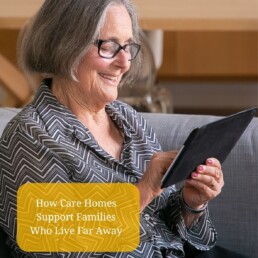
How Care Homes Support Families Who Live Far Away
Staying Connected Across the Miles: How UK Care Homes Support Families Who Live Far Away Families…

How to Talk to Parents About Care Homes: A Practical Guide
Understanding the Challenge Discussing care homes with a parent who resists the topic can be one…
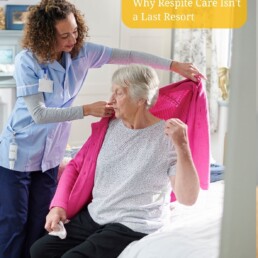
Why Respite Care Isn’t a Last Resort — It’s a Smart Choice
Why Respite Care Isn’t a Last Resort — It’s a Smart Choice Respite care is often…